Looking for a home with sweeping views in East Wenatchee? It is easy to see the appeal. A hillside property can offer a striking setting, more privacy, and a daily backdrop of river, valley, and sky. But the lot itself often matters just as much as the house. If you are thinking about buying a view home here, this guide will help you understand what to look for, what questions to ask, and how to compare hillside living with more in-town options. Let’s dive in.
Why East Wenatchee Has View Homes
East Wenatchee’s landscape is a big part of what makes these properties stand out. Douglas County’s elevation ranges from about 600 feet near the Columbia River to more than 4,000 feet on Badger Mountain, which creates the benches, slopes, and elevated lots that many buyers want for views.
That same setting also brings extra planning considerations. The City of East Wenatchee’s long-range planning framework includes climate resiliency and critical-areas protection, which matters when a home sits on a slope or in a more exposed location. In simple terms, not every scenic lot will function the same way for access, maintenance, or future projects.
Confirm the Property Jurisdiction Early
One of the first things to verify is whether the property is inside East Wenatchee city limits or in the Greater East Wenatchee Urban Growth Area. Some homes may feel like they are part of the city while still falling under county jurisdiction.
That distinction can affect review standards, road responsibility, and how future improvements are handled. The city says unincorporated UGA areas remain under county jurisdiction, even though the city takes the primary planning role, and Douglas County says it has adopted each city’s zoning standards within the unincorporated portion of the UGA. For a buyer, that means it is smart to confirm the exact jurisdiction before you get too far into the process.
Evaluate the Lot, Not Just the View
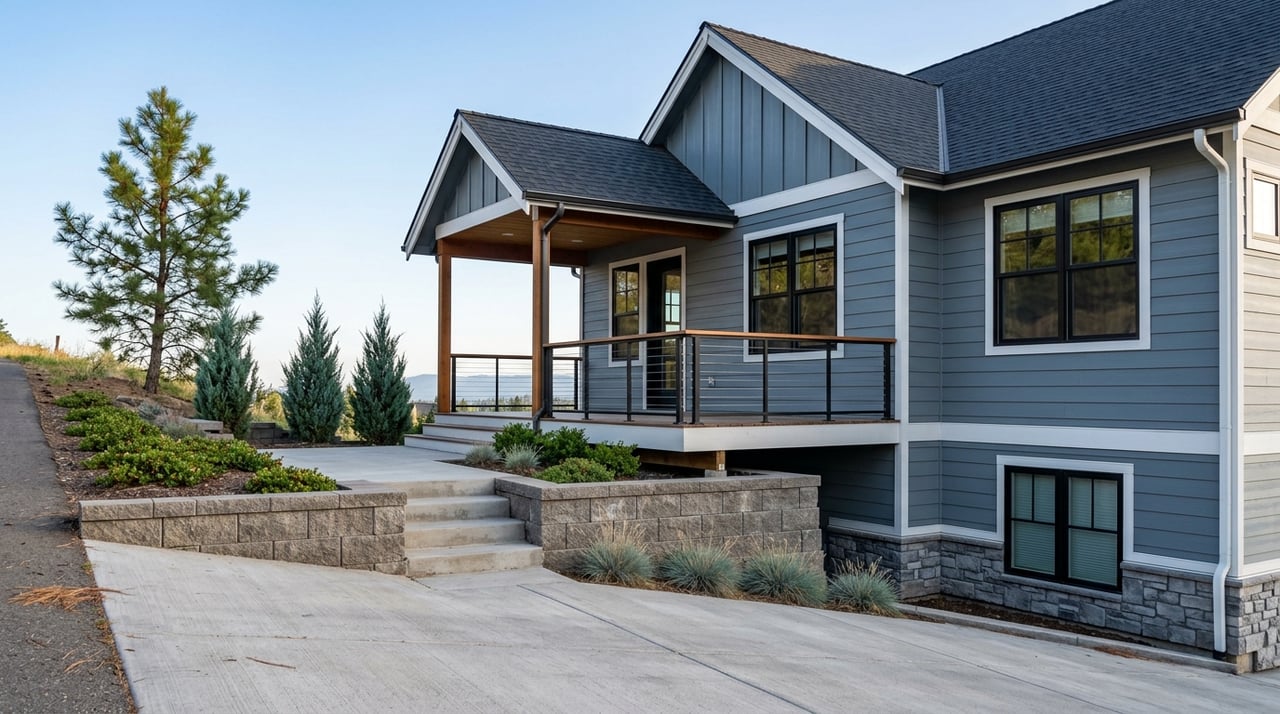
A beautiful view can grab your attention fast, but the day-to-day function of the lot is what often determines whether the home feels easy to live in. On a hillside property, flat usable space may be limited, and that can affect everything from parking to outdoor entertaining.
As you tour homes, pay close attention to:
- Driveway grade
- Turning radius for vehicles
- Garage entry and ease of approach
- Guest parking or parking pads
- Retaining walls
- Steps from parking to the front door
- Usable yard space
- Deck and patio layout
In East Wenatchee, access details matter. City code review materials show that new or revised driveways onto city streets require city engineer approval. The city may also deny direct access onto arterials and collectors if alternate access exists, and access is generally steered toward lower-volume streets when possible.
Road Access and Winter Maintenance Matter
Hillside living can feel very different in January than it does on a bright July evening. Before you fall in love with a property, make sure you understand how the road is maintained and who is responsible for it.
Douglas County’s GIS reference maps include primitive roads, snow plow routes, and speed limits, but the county also warns that mapped roads may not be improved or open to public use. The county further states that private roads do not receive county winter-weather services. If a home is inside East Wenatchee city limits, city streets are maintained by the city instead.
That public versus private road difference can shape your everyday experience. Douglas County says road treatment is prioritized by traffic volume and emergency access. East Wenatchee says its public works crews prioritize main arteries and feeder streets, which means lower-priority roads may take longer in a weather event.
If the home has sidewalks, East Wenatchee property owners must clear them within 24 hours after snow or ice stops falling, and snow should not be thrown into the street. On exposed lots, you may also deal with more wind, icy spots, or runoff than you would on a more sheltered in-town property.
Understand Weather at Elevation
East Wenatchee’s climate helps explain both the upside and the upkeep of view properties. Douglas County lists East Wenatchee with an average January high of 34.4°F and low of 21.7°F. In July, the average high is 87.8°F and the average low is 59.9°F.
The county also reports annual precipitation of 8.95 inches and annual snowfall of 27.9 inches. That mix can make hillside homes feel sunny and dry in summer, but it also means you should think carefully about winter access, snow storage, and irrigation.
The city’s climate resiliency planning notes that East Wenatchee is already experiencing extreme heat, drought, and wildfires, with planning also designed to address landslides, smoke, and air-quality impacts. For buyers, that does not mean every hillside home is a problem. It means the site deserves a closer look so you can understand its exposure and maintenance needs.
Steep Slopes Can Change the Equation
Not all view lots are created equal. The Greater East Wenatchee Comprehensive Plan treats steep or unstable slopes as geologically hazardous areas in certain cases, including areas with landslide risk, slopes steeper than 15 percent with seepage conditions, and areas with a slope of 45 percent or steeper and 10 or more feet of vertical relief unless composed of consolidated rock.
For you as a buyer, the practical takeaway is simple. A dramatic setting may come with added limits on building, remodeling, drainage work, or future expansion. If you are considering vacant land or a property with major improvement potential, it is especially important to verify what the site can realistically support.
Outdoor Living Takes More Planning
Many buyers picture a view deck, a quiet patio, or a backyard that opens toward the valley. Those features can absolutely be part of the appeal, but hillside lots often need more thoughtful planning than flatter lots in town.
Sun exposure, privacy, drainage, and usable space all come into play. Given the county’s low annual precipitation and the city’s focus on drought and climate resiliency, drought-tolerant landscaping and irrigation planning may matter more on exposed view lots than on more shaded in-town properties.
When you visit a home, look beyond the staging and ask yourself how the outdoor space will work in real life. Is there room for seating, storage, pets, gardening, or simple everyday use? A great view feels even better when the lot also supports your routine.
View Homes Versus In-Town Homes
If you are deciding between a hillside home and an in-town home, it helps to compare the tradeoffs clearly. In many cases, the choice is less about one being better and more about which lifestyle fits you best.
Recent citywide median listing data from Realtor.com puts East Wenatchee at $529,000 with an average of 48 days on market, while Wenatchee is listed at $499,000 with an average of 58 days on market. These are not view-home-specific numbers, but they do provide a useful market baseline.
That baseline suggests the price difference is often driven more by the lot itself, access, and site work than by the city name alone. In practical terms, in-town homes often offer easier daily access, simpler snow management, and fewer slope-related unknowns. View homes often offer more privacy, outlook, and a more distinctive setting.
| Home Type | Common Advantages | Common Tradeoffs |
|---|---|---|
| In-town home | Easier access, simpler winter routines, more predictable lot use | Less privacy, fewer elevated views |
| Hillside view home | Scenic outlook, distinctive setting, added privacy | More site-specific maintenance, access and slope questions |
How to Tour a View Home Wisely
A standard showing is not always enough for a hillside property. You want to see how the home works from the street all the way to the front door, not just how the kitchen photographs.
Douglas County says its map products are for general reference only and recommends reviewing official plats and surveys, physically inspecting the property, and obtaining a professional opinion to verify title, legal description, and physical condition. That advice is especially important for view homes, where driveway layout, turnaround space, and private-road status can matter as much as the home’s interior finishes.
During a showing or virtual tour, ask to see:
- The route from the main road to the driveway
- The steepest portion of the drive
- Where guests can park
- Winter parking options
- Steps from parking to entry
- Retaining walls and drainage paths
- Deck and patio orientation
- The true usable yard area
For remote buyers, this is where local guidance and FaceTime showings can be especially helpful. A video tour that covers access, grade, and lot function can give you a much clearer picture than listing photos alone.
Check Utilities Before You Assume
If you are looking at vacant land, a custom-build opportunity, or a major remodel, verify utility availability early. The current comprehensive plan says development in the UGA is expected to have urban services, and phased development may allow temporary on-site septic where sanitary sewer is not available.
That means you should not assume a lot is fully ready for immediate construction or expansion without checking the details. Utility status can affect timing, budget, and what is realistically possible on the site.
A Smart Way to Shop East Wenatchee View Homes
The best East Wenatchee view home is not just the one with the widest panorama. It is the one that matches your comfort level with access, upkeep, weather exposure, and lot functionality.
If you value privacy, a distinctive setting, and long-range views, hillside living may be a great fit. If you prefer simpler day-to-day routines and easier winter access, an in-town option may serve you better. The key is knowing what you are buying before the view makes the decision for you.
When you want practical guidance on East Wenatchee homes, lot conditions, and what daily living may really look like, Sara Wagg can help you compare options and move forward with confidence.
FAQs
What should you check first when buying a view home in East Wenatchee?
- Start by confirming the property jurisdiction, road type, driveway layout, and winter access, since those factors can affect daily use as much as the view itself.
How do East Wenatchee hillside homes differ from in-town homes?
- Hillside homes often offer more privacy and wider views, while in-town homes usually provide easier access, simpler snow management, and fewer slope-related questions.
Why does property jurisdiction matter in East Wenatchee?
- Some homes are in the Greater East Wenatchee Urban Growth Area rather than inside city limits, which can affect which local government has jurisdiction over certain property matters.
What weather concerns should you consider with East Wenatchee view homes?
- Buyers should think about snow access, ice, wind exposure, summer heat, drought conditions, irrigation, and the property’s overall maintenance needs through the seasons.
What should you ask to see during a virtual tour of an East Wenatchee hillside home?
- Ask to see the full route to the property, the steepest part of the driveway, parking areas, steps to the entry, retaining walls, drainage areas, and the home’s usable outdoor space.
What should you verify before buying East Wenatchee land for a custom build?
- Check utility availability, including whether urban services are in place and whether sewer access or temporary on-site septic may apply to the property.